
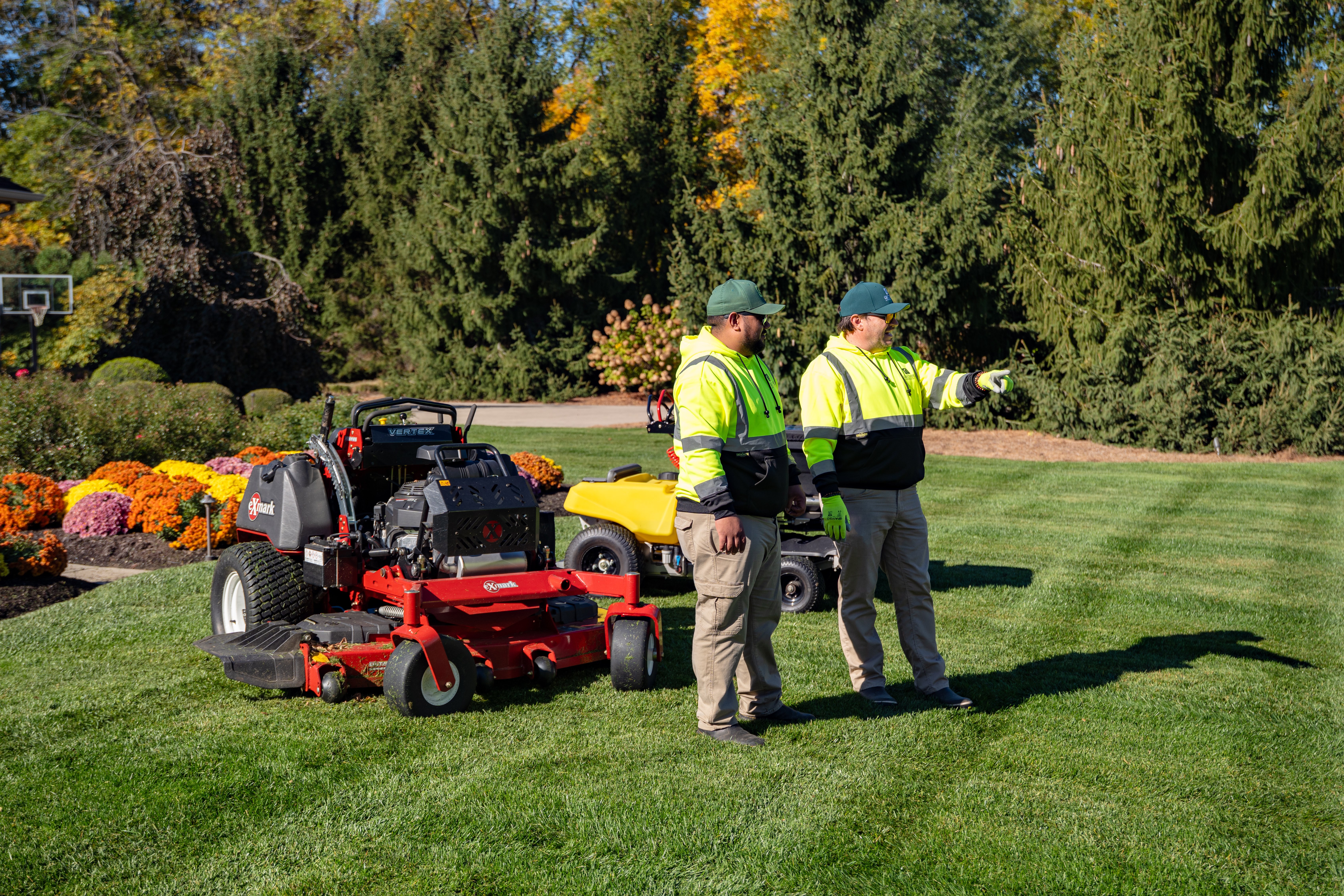
Who has ever pulled up to a jobsite and found that the crew started in the front and blew all the leaves towards the back of the fence instead of towards the truck, parked out front? 🙋
We could've started in the back and worked our way to the front instead and it would've saved us from moving all the leaves twice.
While it was tempting to point out to the crew working there that this was a really dumb way to do this task, I had to admit it was really my own fault. I didn't train them properly or show them the most efficient way to work. My experience could benefit all of us if I shared it.
Efficiency doesn't happen by accident. It happens when we have great notes, meticulous plans, and effective training. If you've been frustrated by inefficient work this year, here's where I would start:
1. Sitemaps
Sitemaps remove confusion. We use maps for:
-
Snow: We mark where salt goes, where the snow pile should be, and any other hazards.
- Floral Installs: We map how many and which flowers go where for all beds and containers that the crew will be planting.
- Design-Build Installs: We have a to-scale plan printed for all installations so that our team knows exactly what should go where and has measurements. Even a small, simple enhancement will have a sketch with measurements noted.
This has been so helpful in standardizing work, reducing confusion, and overcoming language barriers in all the work that we do. It gets us better results with less back-and-forth.
2. Teach Your Team
It's been a while since I worked on a crew, but I have experience that I sometimes forget others don't have. We need to say out loud to new crews "start your blowers on the back corner and work your way to the front;" We can't expect them to read our minds and do it the right way if we aren't showing them how.
3. Can Sales Help?
There's a big difference between being able to fit a Vermeer through a gate versus having to get materials in using a wheelbarrow, but if you don't measure the gate opening your crew could be surprised when they arrive onsite. Having a checklist that takes site access into account before we set pricing and hours can save a lot of headaches later. That's part of our sales process now, but it wasn't always, and is just one example of how our entire team can be part of solutions.
To catch issues like this, we have a dial in Aspire that is set to record any job that goes 15% over or under on hours. Our teams can then dig into why the job was so far off so that we can fix our systems before we make the same mistake again.
I've made countless mistakes in my 42 years in business, but what I try not to do is make the same mistake twice. This fall, we're opening up Grunder Landscaping Co. during our GLC Field Trips so that other landscape pros can come and learn from my mistakes, too. We'll go into detail on our systems, show you how we operate, and answer your questions in this small-group event. Our next one is already sold out, lock in your spot to join us in September, October, or December now to make sure you don't miss out!

Marty Grunder
Founder & CEO
The Grow Group & Grunder Landscaping Co.