
Most landscaping companies do not struggle to find customers. They struggle to find the right customers. There is a meaningful difference between a full schedule and a profitable one, and that gap usually comes down to one question: who is the business built to serve?
The best customers for a landscaping business are not simply the ones willing to pay.  They are the ones whose needs align with the company's strengths, whose service locations support efficient routing, and who value the work enough to stay long-term. When a landscaping company is intentional about the types of clients it pursues, everything gets easier: scheduling becomes more predictable, crews become more efficient, and profit margins improve without adding more work.
This guide breaks down the concept of the ideal client for landscaping businesses, explores common customer types and what makes each one worth pursuing, and walks through a practical framework for determining which segment is the right fit for a given company.
Common Types of Landscaping Customers
(And What Makes Each One Worth Considering)
Landscaping customers fall into several broad categories, each with distinct needs, expectations, and revenue potential. This is not an exhaustive list, but it covers the segments most commonly found in residential and commercial landscaping businesses.
Affluent residential clients are often among the best customers for landscaping companies focused on quality work. These homeowners typically own larger properties, invest in comprehensive service packages that include lawn care, bed maintenance, seasonal color, and enhancements, and are more likely to stay loyal when the work meets their expectations.
The average revenue per account in this segment is high, and referral potential is strong. When a neighbor walks over to ask who does the lawn, a good answer can generate a new client within the same service route.
The limitation is that high-value homeowners have high standards. They expect responsiveness, consistency, and quality that matches their investment. Companies that can deliver that consistently will find this segment to be one of the most valuable they serve.
HOA contracts offer something most individual residential accounts cannot: scale. A single agreement can cover dozens of properties within a defined area, creating predictable recurring revenue and dense routes that improve crew efficiency. For landscaping companies looking to grow volume without dramatically expanding their service area, HOAs are worth serious consideration.
The tradeoff is process. HOAs typically require competitive bids, involve committee approval, and may have slower payment timelines than individual homeowners. Companies that invest in strong proposals and manage the relationship at the board level tend to retain these contracts for years.
Commercial clients, including retail centers, office parks, and industrial properties, offer high-value contracts and the kind of consistent, repeatable work that makes scheduling straightforward. These customers often need ongoing maintenance rather than one-time projects, which creates steady recurring revenue across the season.
Property managers, in particular, often oversee multiple properties and represent significant upsell opportunity. A landscaping company that earns trust on one location is well-positioned to take on additional sites in the same portfolio. Commercial clients tend to have professional expectations and require proper insurance and documentation, so companies pursuing this segment need the back-office infrastructure to support it.
New movers represent a high-conversion opportunity for lawn care businesses. People who have recently purchased a home are actively looking for services and have not yet established loyalty to a local provider. They are open to establishing new relationships, and the timing of outreach matters enormously.
Direct mail to new homeowners, partnerships with real estate agents, and presence in new development neighborhoods are all effective acquisition channels for this segment. The challenge is retention. Without a deliberate plan to convert a first service into a recurring contract, new homeowners can quickly become one-off jobs that do not move the needle on customer lifetime value.
Schools, colleges, religious institutions, and campus facilities often have large properties with consistent maintenance needs. Because their operations are tied to academic or organizational calendars, they offer predictable seasonal work and long-term contract potential. These clients often value relationships and tend to stay with vendors who perform reliably year over year.
Budget approval processes can be slow, and decisions may involve multiple stakeholders. However, for companies willing to navigate that process, institutional clients can become anchor accounts that stabilize the schedule and provide revenue predictability.
What Makes a Customer Your Ideal Client?
Understanding the different types of landscaping customers is a starting point. The deeper work is evaluating which segment aligns with the specific capabilities, goals, and structure of the business. Here are the factors that matter most.
Customer Lifetime Value and Contract Length
A customer who signs a recurring maintenance contract and stays for five years is worth dramatically more than a customer who books a one-time cleanup. When evaluating customer segments, landscaping companies should think beyond the initial job and ask: how long do these clients typically stay? Do they expand services over time? Are they likely to refer others? The answers reveal true value that a single invoice cannot capture.
Margins and Cost to Serve
Not all high-revenue customers are high-margin customers. Properties that require excessive drive time, specialized equipment, or high levels of client communication can erode profitability even when the contract value looks attractive on paper. The best landscaping customers are the ones where the revenue is strong and the cost to serve is manageable. Tracking job costing by customer type gives companies the data they need to make these comparisons accurately.
Schedule Predictability and Route Density
Efficient routes are one of the most overlooked drivers of landscaping profitability. A customer who fits naturally into an existing route is worth more than a customer of equal revenue who requires a detour. When building a customer base, landscaping companies should think about geographic concentration and route optimzation. A block of recurring clients in one neighborhood is almost always more profitable than the same revenue scattered across the service area.
Schedule predictability matters too. Clients who need weekly mowing on a consistent schedule are easier to plan around than clients with unpredictable or one-off service needs. Recurring clients allow companies to build reliable crew schedules, reduce idle time, and plan staffing more accurately.
Referral Potential and Local Visibility
Some customer segments generate referrals naturally. Residential clients in dense neighborhoods see each other's properties and talk. Commercial clients often know other property owners or managers in their network. When a landscaping company does excellent work for a visible client, the marketing value extends beyond the account itself.
A customer referral program can accelerate this effect. Offering existing clients a reward for referring new customers who convert, whether through service credits, gift cards, or other incentives, turns satisfied customers into active advocates. The most effective referral programs are simple to understand, easy to participate in, and promoted consistently at touchpoints like the first service visit, invoices, and follow-up emails.
Alignment with Core Services
The ideal client for a landscaping business does not just represent good revenue potential. They want the services the company does best. A company built around residential lawn care will find commercial clients more difficult to serve well, not because commercial work is harder in isolation, but because the crew training, equipment, insurance, and systems required are different. Chasing customer types that do not align with a company's actual capabilities creates operational stress that outweighs the revenue.
How to Determine Which Customer Segment Is Right for Your Business
With a clear picture of the landscape customer types and the factors that drive value, the next step is doing the internal work. Here is a practical framework for figuring out which customers are the best fit.
Start with existing customers. Pull up the accounts that have the highest lifetime value, the cleanest payment history, the fewest complaints, and the best referral activity. What do they have in common? Are they in a particular neighborhood? A particular industry? Do they share similar property types or service needs? The patterns in a company's current client base are one of the most reliable indicators of where to focus growth.
Honest self-assessment is essential here. What services does the company execute at a consistently high level? What does the crew have the right equipment and training to handle? Where has the business earned strong online reviews or positive word of mouth? The answer points toward the services that should be the focus, which in turn points toward the customers who need those services most.
Smaller landscaping companies generally benefit from higher-margin residential clients who do not require large crews or complex equipment. As a business grows, commercial or institutional clients may become more attractive because of the scale they offer. Cash flow timing matters too. New homeowners and residential clients often pay invoices quickly, while commercial and municipal clients may have longer payment cycles. Matching customer type to current financial structure prevents cash flow problems that can stall growth.
Once the analysis is done, write it down. A documented ideal client profile gives everyone on the team, from the sales team to the crews, a shared understanding of who the company is trying to serve. This profile should include the type of customer, geographic criteria, typical service needs, expected contract length, and any red flags that suggest a poor fit. When new landscaping leads comes in, the profile becomes a filter that helps the business make faster, more confident decisions about whether to pursue it.
Attracting More of Your Best Customers
Once a landscaping company knows who its ideal client is, the next step is building the marketing and sales systems to find more of them.
Optimize Your Google Business Profile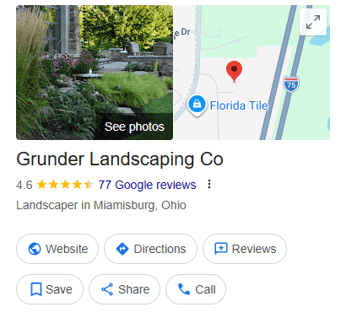
A well-maintained Google Business Profile is foundational. For local homeowners and commercial clients searching for landscaping services in the service area, Google Maps is often the first landscaping customer can find you. A complete profile with current photos, accurate contact information, and active responses to online reviews builds the credibility that converts searches into calls. Consistent local landscaping SEO efforts compound over time, making the business easier to find before competitors even show up in search results.
Use Direct Mail and Door-to-Door Outreach
Direct mail remains effective for residential segments, particularly when targeting new homeowners or specific neighborhoods where the company already has a presence. Door-to-door outreach in dense service routes can also be surprisingly efficient when crews are already in the area. Both approaches work best when the messaging is specific to the customer type being targeted.
Invest in Content Marketing and Email Marketing
Content marketing and email marketing help landscaping companies build authority over time. Publishing helpful content around common lawn care questions, seasonal maintenance guides, and local landscaping topics positions the business as the area expert. This kind of content attracts potential customers who are already thinking about landscaping services, making them easier to convert when they reach out.
Build a Local Referral Network
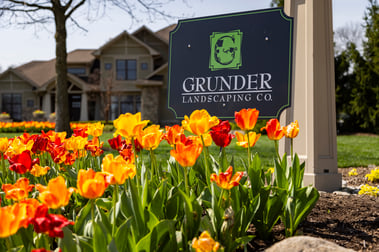 Do not underestimate the value of the local network. Real estate agents, property managers, nurseries, and other local businesses often have relationships with exactly the kind of clients a landscaping company wants to reach. Building those referral partnerships, and maintaining them through consistent communication and mutual benefit, is one of the most cost-effective ways to grow a customer base. Before and after photos from completed jobs, shared across the company website and social channels, demonstrate the quality of work and make it easier for satisfied customers to refer others.
Make Your Crews and Equipment Work as Advertising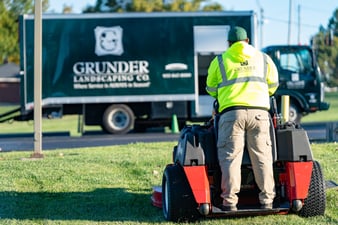
Branded vehicles, lawn signs at active job sites, and crew professionalism also serve as constant marketing in the community. Every crew in the field is a visible advertisement for the business. Companies that understand this treat customer-facing presentation as seriously as any digital marketing investment.
Turning New Customers Into Long-Term, Recurring Clients
Acquiring the right customer is only half the equation. Keeping them is where landscaping businesses build real equity. Customer retention starts with the first service. Companies that show up on time, execute the work thoroughly, and leave the property looking noticeably better than they found it create the kind of first impression that converts one-time clients into recurring ones.
A few practices make a measurable difference in retention. Proactive communication, whether it is a reminder before a scheduled visit or a follow-up after a major service, shows clients that the company is engaged and organized. Bundled service packages give customers a reason to add services rather than shop around each season. Loyalty programs and consistent check-ins build the kind of relationship where clients feel valued rather than just billed.
Requesting online reviews from happy clients should be standard practice. Reviews do double duty: they strengthen the Google Business Profile and signal to future customers that the business delivers on its promises. The best time to ask is shortly after a successful service, when the client's satisfaction is fresh.
Building a Business Around the Right Customers
The best customers for a landscaping business are not a mystery. They are the ones who need what the company does well, stay long enough to deliver real lifetime value, and exist in enough concentration to make growth efficient. The challenge is doing the work to identify them, define the profile clearly, and build the systems to find more of them.
Landscaping companies that take this approach stop competing on price and start competing on fit. They stop accepting every job that comes through the door and start making intentional decisions about where to invest their time, crew capacity, and marketing dollars. The result is not just a busier schedule. It is a more profitable, more sustainable business built around customers who are glad to pay for the work and quick to refer others.
Getting clear on the ideal client is not a one-time exercise. It evolves as the business grows, as services expand, and as the market changes. The landscaping companies that revisit this question regularly and adjust their approach accordingly are the ones that build something worth owning for the long term.

About The Grow Group
Led by Marty Grunder, The Grow Group is a premier coaching and education firm for landscape professionals. We provide innovative events like our annual GROW! Conference, peer groups, and real-world resources to help landscaping business owners and their teams succeed. Everything we teach is based on what we know works because we test it ourselves at our "living laboratory," Grunder Landscaping Company, the business Marty began as a teenager and still leads today.
We don't just share theories and ideas. We share tactics we used at our own landscaping company this week that we know still work. Our team brings more than 95 years of combined field experience to everything we do. Whether you're trying to grow your landscaping business or get better control over it, we can help get you where you want to go.
Not sure where to start? Sign up for our weekly Great Idea to get free strategies, tips, and tactics for running your landscaping company delivered to your inbox each Sunday. Listen to episodes of The Grow Show podcast for practical advice you can implement right away.