
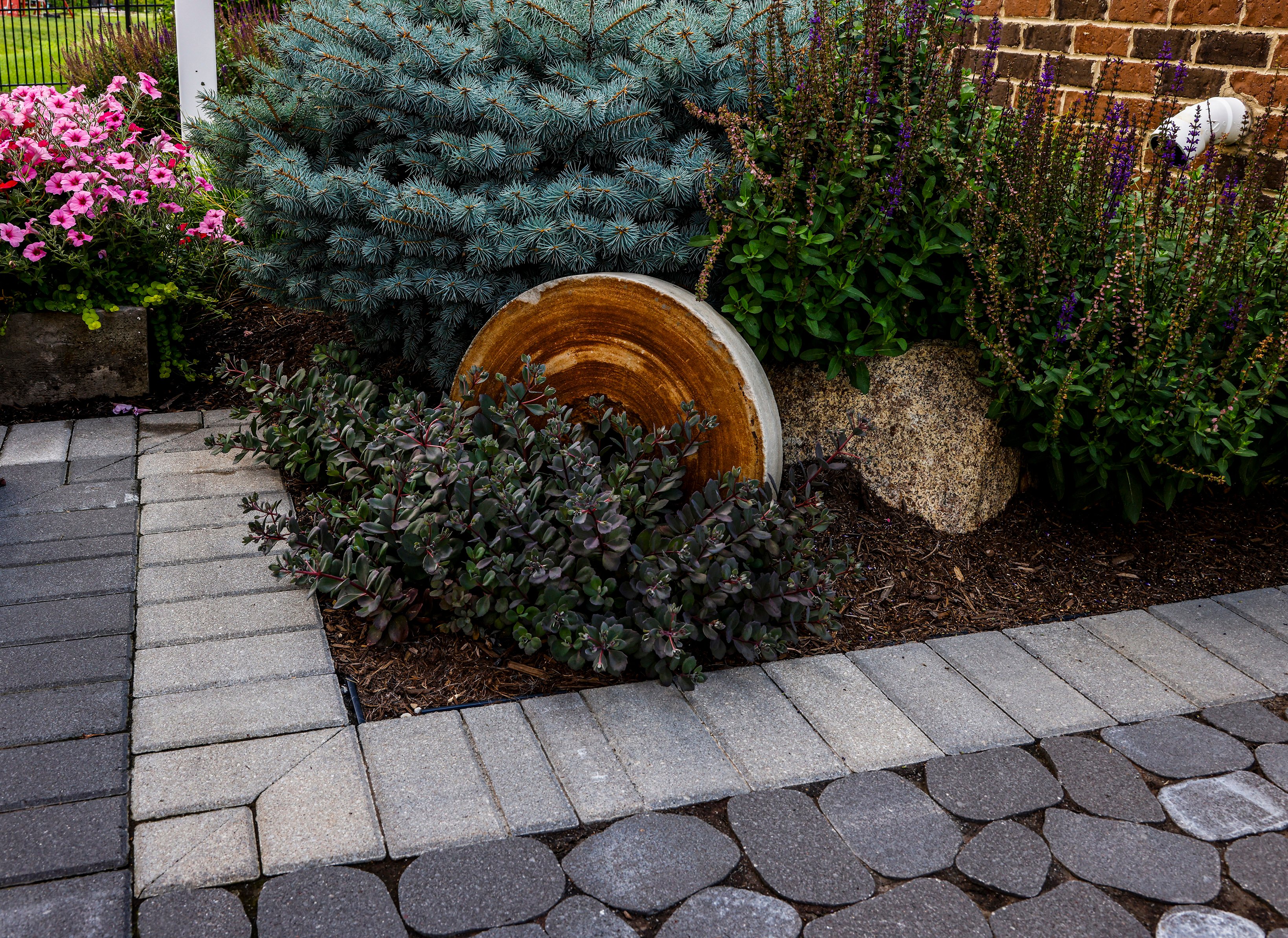
When a landscaping website works well, it runs around the clock, builds trust before a single phone call, and delivers a steady flow of qualified leads. When it doesn't work, it sits quietly in the background while potential customers choose a competitor whose site told a better story.
The good news is that building a site that generates real business isn't complicated. It comes down to a clear structure, strong visual content, smart service pages, and a few design decisions that make it easy for visitors to take the next step. Here, we'll cover the website ideas that separate high-performing sites from forgettable ones.
Start With a Clear Purpose
Before making any design decisions, successful companies define what they want their website to accomplish. Many sites are built without a clear goal in mind, and it shows. A strong landscaping website serves three distinct purposes, and the best ones do all three well.
Generate Leads
The primary goal for most sites is lead generation: getting visitors to call, fill out a form, or request an estimate. Every page, every photo, and every call to action should serve the goal of generating quality leads for your landscaping business. Companies that keep this focus throughout the build process end up with sites that feel intentional rather than cluttered.
Reach the Right Customers
A close second is defining the audience. Businesses that serve residential clients need a different look and feel than those focused on commercial services, or those that do both. The clearest sites are built with a specific customer in mind, which makes it much easier to choose the right photos, language, and service categories.
The Landscaping Company's Story
A website is one of the best opportunities a company has to show who they are before anyone picks up the phone (online customer reviews being the best). The work itself is visual and personal, and potential clients want to know they're hiring a team they can trust. A site that shares your landscaping company's core values, history, showcases the people behind the work, giving visitors a reason to choose that company over a competitor with a comparable service list. The companies that do this attract more leads and better-fit clients.
Landscaping Website Design That Builds Trust
The design of a site should reinforce the quality of the work. That starts with a few fundamental decisions.
High-quality images of completed projects are the single most effective trust-builder on a site. Visitors know the difference between AI/stock photography and real work, and so does Google. Authentic project photos demonstrate capability in a way that no amount of well-written copy can replicate.
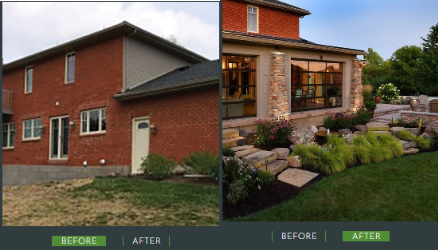
A solid photo library includes before and after photos for each major service, project gallery photos organized by service type or scope, team photos showing the crew at work, and images of any notable or recognizable projects in the service area.
The best landscaping website design gets out of the way and lets the photography lead. Clean layouts and brand color palettes that complement your imagery keep the focus where it belongs: on the work. A mobile-first, responsive layout isn't optional anymore. The majority of web traffic comes from mobile devices, and a site that looks great on a desktop but breaks on a phone is losing leads.
Image speed matters too. Large, unoptimized photos slow down page load times, which frustrates visitors and hurts search rankings. Compressing images and enabling lazy loading for gallery pages keeps things running fast without sacrificing visual quality.

The first thing a visitor sees when they land on a site should do a lot of work quickly. A real project photo as the hero image immediately demonstrates the company's capabilities. A concise headline that communicates what the company does and who it serves anchors the page. And a single, prominent call to action gives visitors an obvious next step, whether that's "Get a Free Estimate," "Request a Consultation," or "See Our Work."
Use Calls to Action That Convert
A call to action is more than a button. It's the moment a website asks a visitor to make a move, and the best ones feel relevant rather than generic. Companies that tailor calls to action to specific services outperform those relying on a single "Contact Us" prompt across every page.
A lawn care page, for example, converts better with a call to action focused on lawn care, like "Get a Free Lawn Assessment," rather than a generic contact form. Service-specific calls to action speak directly to what that visitor is researching, which increases the likelihood they'll follow through.
Clear CTA copy like "Get a Free Estimate" or "Schedule a Consultation" removes ambiguity and tells visitors exactly what to expect when they click.
Phone numbers deserve special attention. A tap-to-call phone number in the site header means mobile visitors can reach the company with one tap, eliminating unnecessary friction. Many potential customers, especially those further along in the decision process, prefer calling to filling out a form.
Portfolio and Project Galleries
The portfolio section is where a site either earns trust or loses it. 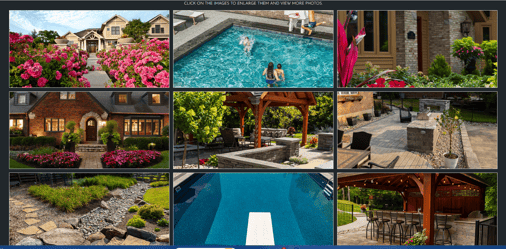
Homeowners and commercial clients are trying to picture their own property, and this helps. A well-organized project gallery lets visitors make that connection a lot easier.
Don't just drop photos and move on. 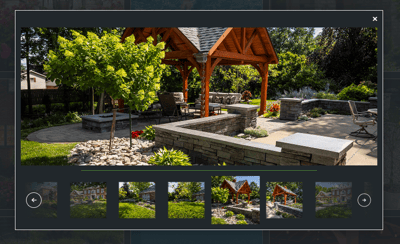 Give visitors the context they need to go from "that looks nice" to "I want that." For design-build companies and landscape architects, this section carries even more weight. Showing multiple views of a project to give the full picture signals to higher-end clients that they're looking at a team that knows what they're doing.
It's also important to remember to add alt text to your images, so Google can understand what the image is about. It can't literally see the image, so the details in your alt text tell Google what it's showing people if it takes them to your site.
Build Credibility With Customer Testimonials and Social Proof
Customer testimonials are probably the most effective tools on a site because they let satisfied clients do the selling for you.
Place them near key calls to action, like next to the "Request a Quote" button, so they're working at the exact moment a visitor is deciding whether to reach out.
The best testimonials are specific. A review that mentions the service performed, the location, and what the customer valued most is far more persuasive than "great service, would recommend."
When you finish a job well, ask your client to mention those details in their Google review. That specificity helps you on the website and in local search results. If you can pull Google reviews in automatically through an integration, do it. It keeps your social proof current without anyone having to remember to update it manually.
Local SEO and Service Area Pages
A beautiful site that doesn't rank in search results isn't doing its job. Local SEO is how companies make sure they show up when homeowners and commercial clients in their service areas are searching for landscaping services.
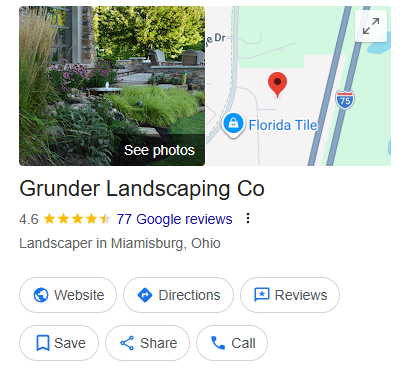
The foundation of local landscaping SEO includes optimizing title tags and meta descriptions on every page for relevant local keywords, claiming and maintaining a Google Business Profile, and building out city-specific service area pages for the towns and neighborhoods the company wants to win work in.
A service area page for each target city, including the city name alongside relevant landscaping services, helps search engines understand exactly where the company operates.
Photos taken on actual job sites carry location data that Google can read, which means authentic project photography does double duty: it builds visual trust with visitors and sends geographic signals to search engines. This is one of the reasons real photos outperform stock photography from an SEO standpoint as well.
Technical Essentials Worth Getting Right
A few technical features separate sites that perform consistently from those that look good but underdeliver. Mobile optimization is non-negotiable. Clients searching for services on their phones need tap targets that are large enough to use easily and a layout that adapts cleanly to small screens.
Schema markup for local businesses and customer reviews helps search engines better understand the site's content and can improve how the company appears in search results. Fast page speeds, clean navigation, and functional contact forms round out the technical foundation that keeps a site reliable and effective over time.
Analytics and event tracking are worth setting up from the beginning. Knowing which pages generate the most form submissions, which calls to action get clicked, and where visitors drop off gives companies the information they need to improve the site over time rather than guessing.
Keep the Site Working After Launch
A website isn't a one-time project. The companies that get the most out of their sites treat them as ongoing assets. Publishing seasonal lawn care guides, updating the portfolio with recent project photos, and performing regular technical and SEO audits keeps the site current and competitive in search results.
A blog section adds long-term SEO value by creating new content around the topics potential customers are searching for. Seasonal guides, project spotlights, plant recommendations, and answers to common questions all give search engines more reasons to recommend the site and give visitors more reasons to stay.
A Site That Works as Hard as You Do
The landscaping website ideas that make the biggest difference come down to a clear structure, authentic photography, thorough service pages, strong calls to action, and the local SEO fundamentals that help the right customers find the business. None of these are complicated, but each one matters.
Companies that invest in a website built around these principles end up with a lead generation tool that works continuously, builds trust before the first conversation, and grows more effective over time. That's the kind of digital presence worth building.

About The Grow Group
Led by Marty Grunder, The Grow Group is a premier coaching and education firm for landscape professionals. We provide innovative events like our annual GROW! Conference, peer groups, and real-world resources to help landscaping business owners and their teams succeed. Everything we teach is based on what we know works because we test it ourselves at our "living laboratory," Grunder Landscaping Company, the business Marty began as a teenager and still leads today.
We don't just share theories and ideas. We share tactics we used at our own landscaping company this week that we know still work. Our team brings more than 95 years of combined field experience to everything we do. Whether you're trying to grow your landscaping business or get better control over it, we can help get you where you want to go.
Not sure where to start? Sign up for our weekly Great Idea to get free strategies, tips, and tactics for running your landscaping company delivered to your inbox each Sunday. Listen to episodes of The Grow Show podcast for practical advice you can implement right away.