
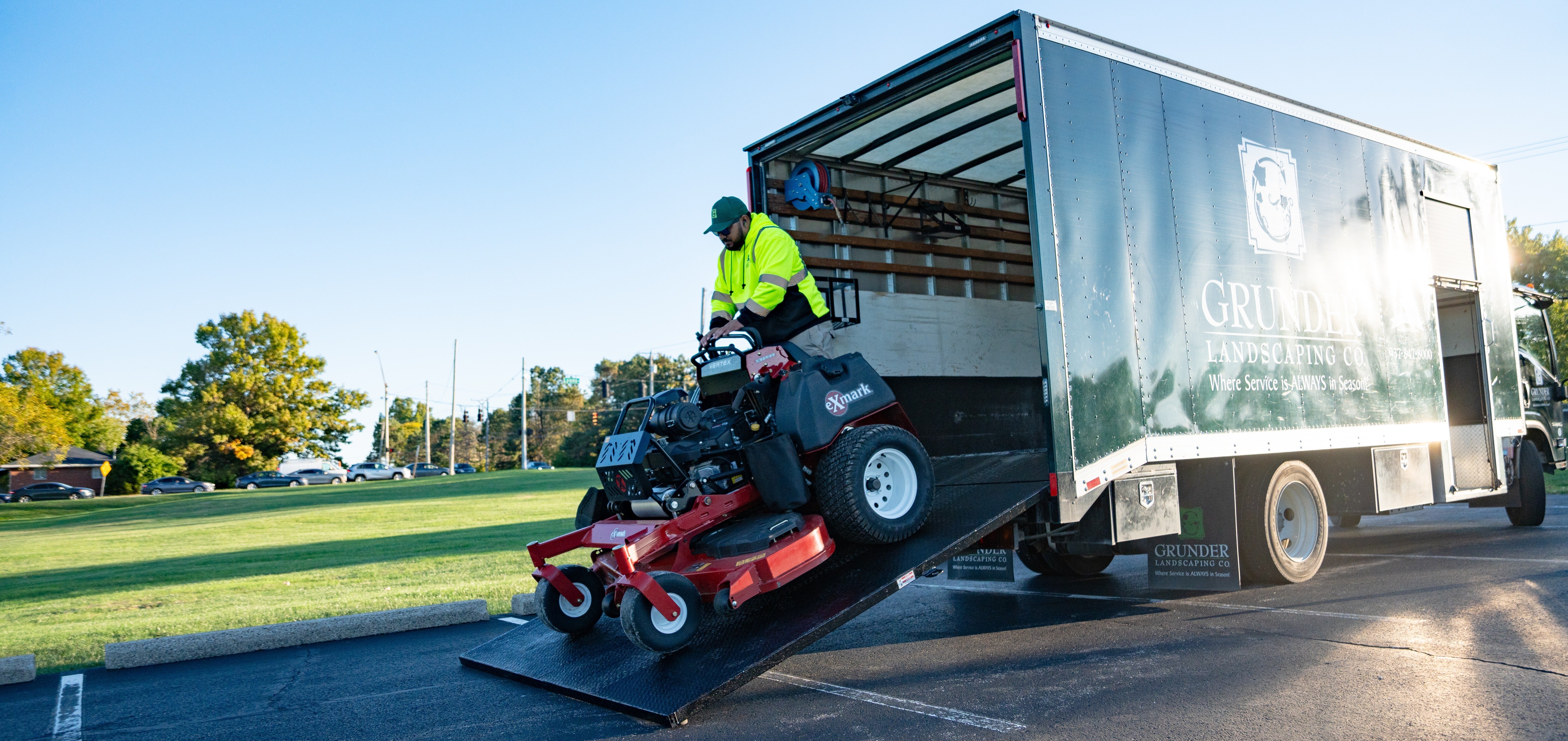
Every landscaping business reaches a point where the question of whether to buy or lease landscaping equipment demands a real answer. A new commercial mower, skid steer, or mini excavator represents a significant financial commitment, and the wrong decision can strain cash flow, create unnecessary debt, or leave a landscaping operation stuck with equipment that no longer fits its needs.
The good news: there is no universally correct answer. The right choice depends on the specifics of the business, the equipment in question, and the financial picture. This guide walks landscape business owners through the key factors to evaluate before signing anything.
Assess Your Landscaping Business Needs First
Before comparing financing options, it helps to get clear on how the business actually uses its equipment. Start by listing every core service the company provides, then track average monthly hours per piece of equipment. A commercial mower running 200 hours a month in peak season tells a very different story than one running 40. 
Identifying peak seasonal months matters too. Landscaping businesses with heavy spring and fall demand but slow winters may find that ownership costs pile up during idle months, while leasing keeps monthly payments predictable year-round.
Evaluate Each Piece of Equipment Individually
Not all landscaping equipment deserves the same decision. Build a simple inventory that captures utilization hours per piece, estimated replacement timeline, and current condition. High-utilization machines that are central to daily operations tend to be better ownership candidates. Equipment with shorter useful lives or rapidly changing technology, like GPS-enabled machines or specialized attachments, may make more sense to lease.
Replacement timeline matters more than most business owners realize. A piece of equipment expected to last ten or more years with proper maintenance is a stronger buy candidate than one that will be obsolete or worn out in three to four years.
Two benchmarks help clarify the buy decision. First, if annual rental costs for a piece of equipment are reaching 30 to 40 percent of its purchase price, that is a strong signal it belongs in the owned fleet. Second, if the revenue a machine generates can cover its purchase price within two to three years, the financials generally support buying outright. Landscaping businesses that track their rental spending by equipment type are often surprised to find they are already at or past these thresholds on several machines.
Compare Buying Versus Equipment Leasing Side by Side
The clearest way to make this decision is a side-by-side cost comparison. For each major piece of equipment, calculate the total cost to own versus the total cost to lease over a set period, typically three to five years.
How an Equipment Lease Works
 Lease terms for landscaping equipment typically run 24 to 60 months. At the end of the term, lessees usually have three options: return the equipment, renew the lease, or purchase the equipment at its residual value, which is the agreed-upon remaining worth of the machine after the lease period.
Residual value is an important concept to understand before signing. A lower residual value means a higher monthly payment but a more affordable buyout at the end. Maintenance obligations vary by lease agreement, so landscape business owners should read carefully to understand what is covered and what is not before committing to a lease program.
Loans vs. Leases
For businesses that want to own their equipment outright, a loan may be the right path. Loan qualification is typically based on credit history, time in business, and revenue. Monthly payments on a loan are usually higher than lease payments for the same equipment because the business is financing the full purchase price rather than just the depreciation during the lease term.
Leasing companies often have slightly different qualification criteria than traditional lenders and may be more accessible for newer landscaping businesses. Regardless of the path, landscape business owners should contact multiple lenders and leasing providers to compare monthly payment scenarios. The difference between a competitive rate and a poor one can add up to thousands of dollars over the life of an agreement.
When to Rent Instead of Buy or Lease
Renting makes the most sense for equipment that a landscaping business uses infrequently. If a mini excavator is needed for two or three jobs per year, purchasing or leasing that machine is hard to justify financially. Rental is also a smart option when a piece of owned equipment breaks down unexpectedly and immediate replacement is needed to keep jobs on schedule.
One practical note: during peak season, rental equipment availability can become a real problem. Landscaping businesses that regularly rely on rented equipment for high-demand periods should plan reservations well in advance to avoid losing jobs to unavailability.
Next Steps
Once the analysis is complete, the practical next steps are straightforward: contact local dealers to arrange test drives, apply for preapproval on financing options before committing, and set a procurement timeline that aligns with the business's upcoming seasonal demand. Starting the financing process early gives the business more leverage to negotiate favorable terms rather than rushing into a decision under pressure.
The landscaping businesses that make the best equipment decisions treat each piece of equipment as a financial calculation, not just an operational one. Doing that work upfront means more cash in the business, better margins, and equipment that fits the operation rather than the other way around.

About The Grow Group
Led by Marty Grunder, The Grow Group is a premier coaching and education firm for landscape professionals. We provide innovative events like our annual GROW! Conference, peer groups, and real-world resources to help landscaping business owners and their teams succeed. Everything we teach is based on what we know works because we test it ourselves at our "living laboratory," Grunder Landscaping Company, the business Marty began as a teenager and still leads today.
We don't just share theories and ideas. We share tactics we used at our own landscaping company this week that we know still work. Our team brings more than 95 years of combined field experience to everything we do. Whether you're trying to grow your landscaping business or get better control over it, we can help get you where you want to go.
Not sure where to start? Sign up for our weekly Great Idea to get free strategies, tips, and tactics for running your landscaping company delivered to your inbox each Sunday. Listen to episodes of The Grow Show podcast for practical advice you can implement right away.