
Most landscaping companies add services without ever asking whether those services are going to be profitable. It's really easy to say yes to a job when you're trying to grow. They're busy, crews are working, and the revenue line keeps growing. The problem shows up later, when the numbers don't match the effort, and owners can't figure out where the money went.
Selecting the right landscaping services to offer is one of the most important decisions a landscaping business can make. Not because every service is a bad idea, but because the wrong mix keeps companies busy without building real profit. This article breaks down which services generate the strongest margins, what makes each one work, and how to think about building a service mix that actually pays off.
Why Profitable Services Matter More Than Busy Services
Landscaping companies that track job costs by service type consistently find the same thing: some services generate strong margins, and some barely cover their costs. Most owners know this is true in theory but don't have the data to act on it. As a result, they keep offering everything, underpricing the work that's hardest to deliver, and leaving money on the table from services that could carry the whole operation.
The Most Profitable Landscaping Services
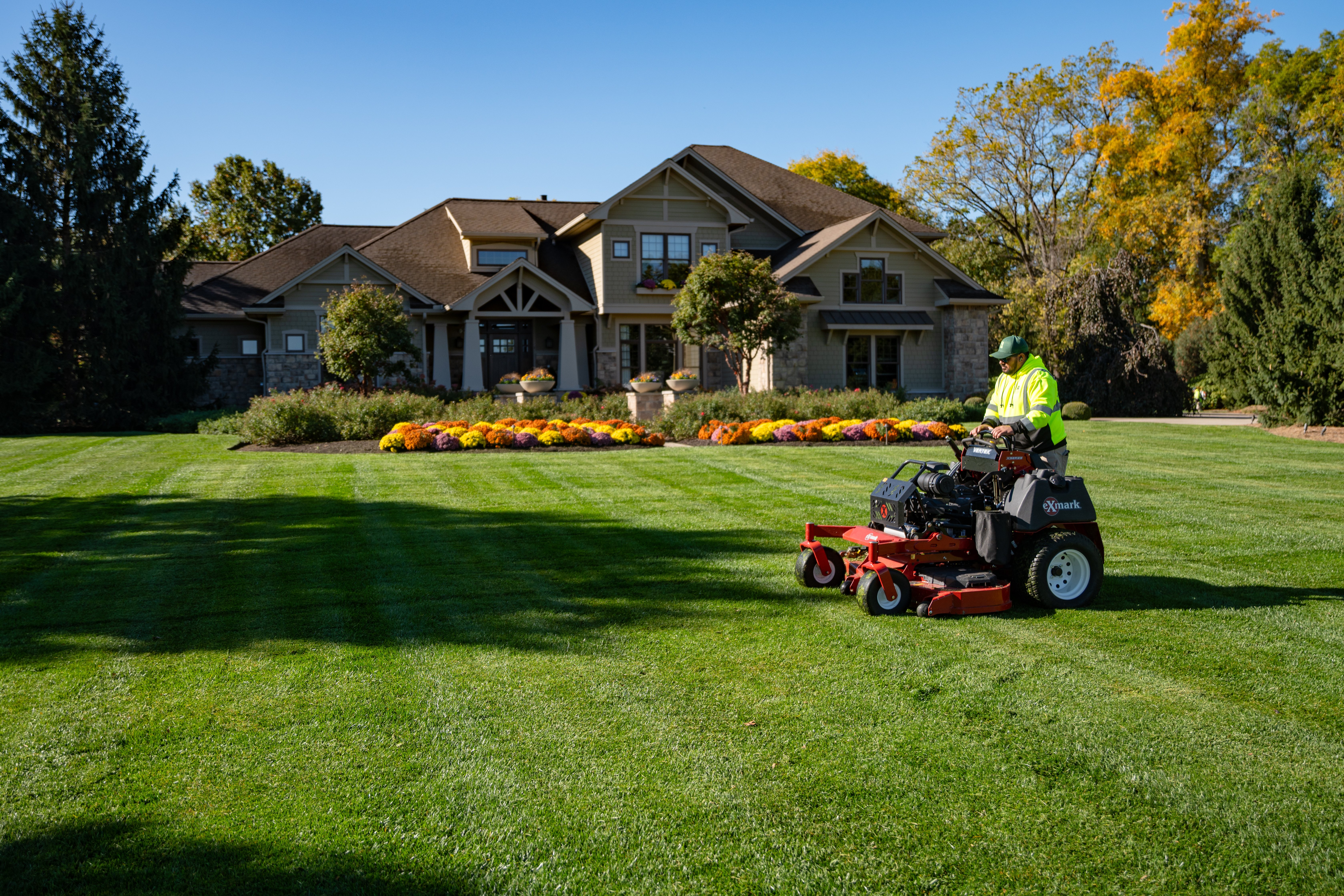
Recurring maintenance contracts are the financial foundation most profitable landscaping companies are built on. Scheduled lawn mowing services, edging, weed control, leaf removal, and general lawn care create predictable, month-over-month revenue that makes cash flow planning possible. The work is already sold before the week starts. The only job is showing up and delivering.
Route density keeps labor costs low. Crews are spending less time driving and more time working, which directly improves margin. Retention rates stay high when service quality is consistent, which means the cost of replacing lost accounts stays low. And every visit to a maintenance client is a built-in opportunity to identify additional work, whether that's a mulch refresh in spring or a drainage fix after a wet fall.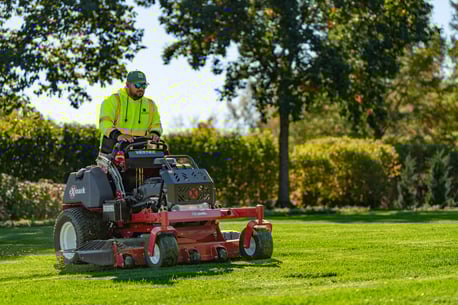
Maintenance contracts also simplify workforce planning. When recurring work anchors the schedule, staffing decisions become more straightforward because the hours aren't entirely dependent on new sales coming in every week.
The maintenance market is competitive. Competing on price alone is a race to the bottom that eventually destroys the landscaping profit margins that make the service worth doing. Landscaping companies that win mowing clients and keep them do it through service quality, reliability, and communication, not the lowest number on a bid sheet. The ones that build real year-round revenue from maintenance are also the ones consistently finding ways to upsell existing clients on additional services rather than treating every visit as just another mow.
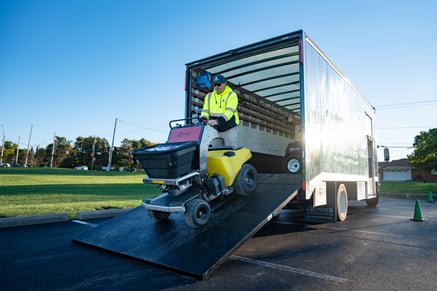
Commercial landscaping offers scale that residential landscaping rarely can. A single contract with a property management company, office complex, or retail center can generate more annual revenue than a dozen residential accounts, often with multi-year terms that provide stability most landscaping companies never experience serving individual property owners.
Larger contract sizes, predictable invoicing, and the operational efficiency of keeping landscape crews deployed across fewer locations all contribute to strong net profit. Commercial clients who are well-served tend to stay. The relationship is built on consistent performance, and once a landscaping company is embedded in a property's operations, switching costs are real on both sides.
 The cross-sell potential adds another layer. Snow removal, seasonal color, enhancement work, and irrigation maintenance can all grow the value of a commercial account significantly over time, especially when the relationship is managed proactively.
Proper bonding, insurance, and a clean track record are requirements before most commercial properties will consider a bid. The procurement process takes longer and runs more formally than residential work. For companies that aren't operationally ready, pursuing commercial contracts too early creates problems. For companies that are ready, it's one of the most stable revenue categories in the industry.
Patios, walkways, retaining walls, and outdoor living spaces consistently produce some of the highest per-job revenue in landscaping. Material and labor costs are real, but so is the perceived value. Homeowners and commercial clients investing in hardscaping projects are making a lifestyle and property value decision, and that context supports premium pricing in a way that commodity lawn care never will.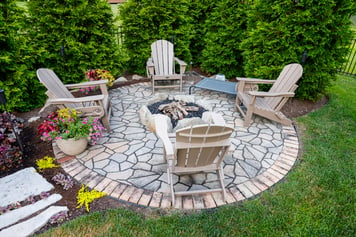
The upsell opportunity built into hardscaping is hard to replicate in other service categories. A client who comes in for a patio frequently adds lighting, planting beds, or irrigation once the project is underway. Well-executed hardscaping also generates referrals and portfolio content that attracts similar clients, making it one of the most effective organic marketing tools a landscaping company can develop.
Skilled hardscaping labor is increasingly difficult to find and retain. Project timelines stretch, weather creates delays, and the cash flow profile looks different from recurring maintenance work. Companies that scale hardscaping successfully tend to have systematic processes for estimating, scheduling, and project management in place before they try to grow the volume.
Irrigation is one of the most specialized landscaping services a company can offer, and that specialized knowledge is exactly what protects the margin. Fewer companies can do it competently, which reduces competition, creates a real competitive edge, and allows stronger pricing.
 Irrigation generates income at installation and again through recurring maintenance agreements each season. That combination of a strong per-job margin plus an annual service contract is hard to find in other service categories. Smart irrigation systems that optimize water usage are also in growing demand as water conservation becomes a higher priority for homeowners and commercial clients alike, adding a selling point that goes beyond the basic installation.
The investment in equipment, parts, and technical training is real, and water regulations in some regions add complexity to system design and installation. But for companies that already have irrigation capabilities or the capacity to develop them, this service consistently ranks among the highest-margin work available.
When design is bundled with installation, it changes what a landscaping company is selling. A company that sells mowing is competing on price. A company that sells a designed outdoor space is competing on vision, expertise, and outcome. That's a fundamentally different conversation and it supports a fundamentally different price.
Design-build clients who are satisfied with the result frequently become long-term maintenance clients. They return for enhancements, seasonal updates, and improvements year after year. The cross-sell path to irrigation, lighting, and hardscaping is built into the relationship from the start. Over time, a single design-build client can generate far more total revenue than the initial project suggests.
Design-build work requires real capability, whether that's formal credentials or a strong design eye developed over years in the field. Client approval cycles can slow timelines, and managing expectations through the revision process takes discipline. Companies that systematize their design workflow consistently produce better margins than those who treat every project as fully custom.
Mulching and bed maintenance aren't glamorous, but they're among the most efficient work a landscaping company can produce. Low skill requirements, fast turnaround, and easy bundling with existing mowing contracts make them a reliable source of incremental revenue from clients who are already paying for regular service.
.jpg?width=437&height=324&name=Young%20Familys%20Dream%20Yard%20(7).jpg) Curb appeal upgrades are particularly effective upsells in spring and fall when homeowners are focused on how their property looks. These services are quick to quote, fast to execute, and they generate visible results that reinforce why clients keep investing in professional landscaping. The limitation is that this work doesn't differentiate a company from competitors. The businesses that extract real value from mulching and bed work are the ones that build it systematically into their service packages and maintenance agreements rather than waiting for clients to ask.
Curb appeal upgrades are particularly effective upsells in spring and fall when homeowners are focused on how their property looks. These services are quick to quote, fast to execute, and they generate visible results that reinforce why clients keep investing in professional landscaping. The limitation is that this work doesn't differentiate a company from competitors. The businesses that extract real value from mulching and bed work are the ones that build it systematically into their service packages and maintenance agreements rather than waiting for clients to ask.
There's no universal formula for which services a landscaping company should offer. The right mix depends on crew skills, equipment, local market conditions, and where the business is in its growth. What generates steady income and highest profit margins in one market may be oversaturated or underleveraged in another. But a few principles apply consistently across successful landscaping businesses.
New services that land well tend to be adjacent to existing capabilities. Layering irrigation onto a maintenance-only operation requires investment in training, tools, and time before the margins show up. Services that extend naturally from what a company already does well get to profitability faster.
Installation work generates strong per-job margins, but it requires constant new sales to sustain. Recurring maintenance and commercial grounds contracts create the cash flow stability that lets a company invest in installation capacity without financial stress. The most profitable landscaping businesses typically run both: a maintenance base that keeps revenue predictable and an installation portfolio that drives higher average ticket values.
Companies that track actual gross margin by service type make smarter decisions about pricing, investment, and growth. If business management software can track job costing by service, it should be used that way. If it can't, that's a problem worth solving before adding anything new to the menu.
The landscaping industry rewards companies that are deliberate. Knowing which services actually drive profit and building around those, rather than adding everything and hoping the numbers work out, is what separates landscaping companies that grow with control from the ones that just stay busy.

About The Grow Group
Led by Marty Grunder, The Grow Group is a premier coaching and education firm for landscape professionals. We provide innovative events like our annual GROW! Conference, peer groups, and real-world resources to help landscaping business owners and their teams succeed. Everything we teach is based on what we know works because we test it ourselves at our "living laboratory," Grunder Landscaping Company, the business Marty began as a teenager and still leads today.
We don't just share theories and ideas. We share tactics we used at our own landscaping company this week that we know still work. Our team brings more than 95 years of combined field experience to everything we do. Whether you're trying to grow your landscaping business or get better control over it, we can help get you where you want to go.
Not sure where to start? Sign up for our weekly Great Idea to get free strategies, tips, and tactics for running your landscaping company delivered to your inbox each Sunday. Listen to episodes of The Grow Show podcast for practical advice you can implement right away.