

Thinking about adding commercial work to your mostly residential landscaping company? It's absolutely something you can do. Some owners hesitate because they assume the difference between a residential vs commercial landscaping business is mostly about buying bigger mowers and taking on bigger properties. It's not much different than the work you currently do. The difference is in who you answer to, the client expectations, selling these accounts, how you get paid, and how you stay organized as you grow.
Plenty of landscaping companies run both commercial and residential landscaping well, and most started exactly where you are now, with a young business and a lot of questions.
What Counts as Commercial vs Residential?
Residential landscaping services are aimed at homeowners. The priorities are curb appeal, aesthetics, and an inviting space to enjoy, whether that means routine lawn care, a planting installation, or gardens the owner takes pride in. The person paying you is usually the person you talk to and you're only working with one set of expectations.
Commercial landscaping covers everything else: office parks, retail centers, apartment complexes, homeowners associations, medical campuses, industrial buildings, and government facilities. The work often looks similar, but the buyer is different. Instead of a homeowner, you are working with a property manager, a facilities director, or an HOA board, and they answer to owners, tenants, and budgets.
That single change, who the buyer is, is the source of most of the differences between the two markets. It shapes how you sell, how contracts are written, how you get paid, and what a client expects from your crew on site.
Scope, Scale, and Resources
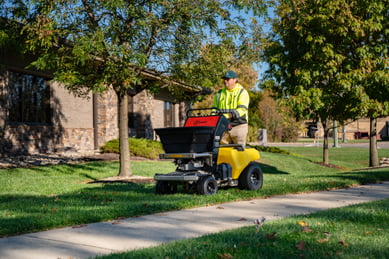
Commercial properties tend to be larger, which means more square footage and, over time, heavy-duty equipment to cover it efficiently. A residential route might run on a mower, a trimmer, and a truck, while a large commercial site may call for wide-area mowers and tools built for long hours. The skill is the same (you still cut grass, prune, and plant); the scale changes.
That said, you do not need a whole new fleet to take on your first commercial account. Many owners start by servicing a smaller commercial property with equipment close to what they already run, then invest as the work grows. Let the accounts justify the equipment.
How Commercial Contracts Differ
On the residential side, a quick estimate often gets the job done, and payment shows up when the work does. Commercial agreements are more formal. A property manager expects a detailed scope of work, clear pricing, and terms in writing, because they answer for every dollar to the people above them.
Payment works differently too. Where a homeowner might pay the day of service, commercial clients commonly bill monthly on net 30 or net 60 terms, so the money can arrive weeks after the work is done. That is manageable, but it means planning your cash flow so payroll and fuel are covered while you wait on invoices.
Commercial contracts also carry expectations around insurance, licensing, and local regulations that residential work rarely does, along with terms for renewal, cancellation, and pricing on multi-year deals. Getting comfortable with how commercial billing and contract terms work is worth doing before you take on much of it.
What Commercial Clients Expect
Commercial clients expect a certain level of professionalism, and meeting those expectations is entirely within your control. A clean truck with your logo, crews in  branded shirts, and a tidy presence on site all signal that you are the kind of company a property manager can confidently hire. They notice, because your work reflects on them.
Communication matters more here too. A homeowner is often around to see the work happen, but a property manager may never watch your crew at all. They want to know the work got done, hear about issues before their tenants do, and reach you easily. Staying responsive builds the trust that keeps contracts renewing.
Good landscaping, as the saying goes, should be seen, not heard. Show up on schedule, do excellent work, keep the client informed, and stay out of the way. That is a standard any committed crew can meet.
Staying Organized Across Both Types of Work
Your employees need to know what they are doing, which property they are on, and when. Commercial clients have little patience for a crew that shows up on the wrong day. You have to stay organized.
Some companies keep dedicated crews for each side, so a team that knows a commercial property well services it every time. That can make good sense as your commercial work grows, but at one or two accounts it is not the only way. What matters more is that your scheduling is clear, your routes are defined, and your team knows the standard each property is held to.
As the commercial side grows, dedicated crews and tighter systems become worth the investment. Early on, focus on staying organized and communicating well, and let your structure evolve with the work.
Selling Commercial Landscaping
Selling to a homeowner and selling to a property manager are two different exercises.
Residential sales are often quick and personal: a homeowner wants their yard to look great and can say yes on the spot. Commercial sales are slower and more deliberate, driven by relationships, references, and reputation.
Commercial contracts are frequently won long before any bid is submitted, because property managers tend to hire contractors they already know or who came recommended by someone they trust. The work of selling commercial is building relationships and visibility with the decision makers around town, and staying patient through a sales cycle that can run weeks or months.
Winning that work is its own skill set, from finding the right property managers to writing proposals that land. We cover it step by step in our guide to how to get commercial landscaping contracts for your business.
Is Commercial Landscaping More Profitable?
This is the question almost every owner asks, and the honest answer is that both sides can be very profitable in different ways. Some owners eye commercial work because they think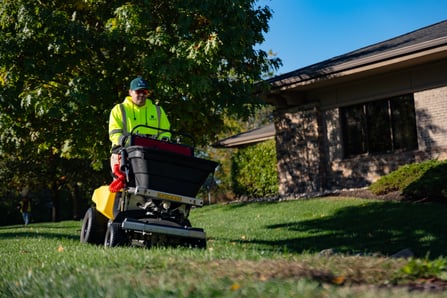 it will improve their numbers. It comes in larger scopes, so a single office park, apartment complex, or retail center can be worth more than dozens of residential accounts, and it often renews year after year. Fewer, larger accounts can also mean less overhead spent competing for one-off jobs.
Residential work has its own strengths that are easy to overlook. Ongoing maintenance accounts (routine mowing, cleanups, and seasonal lawn care) create steady, repeat revenue, and a dense residential route can be highly profitable in its own right. Residential clients often pay faster too, which helps your cash flow.
Neither market is the automatic winner. Profitability comes from pricing your work properly, running efficient routes, and keeping your crews productive, whether the property is a backyard or a business park. The question is less which is more profitable and more which mix fits the business you want to build.
Finding the Right Commercial Client
Not every commercial account is a good account, and part of growing well is learning to recognize a strong fit. A good commercial client values quality over the lowest price, communicates clearly about what they need, and treats the relationship as a partnership. Those accounts renew for years and refer you to other property managers.
A few signs point to a client who may be more trouble than they are worth:
-
one who cares only about price and pushes you to bid below what the work costs
-
who stays vague about scope and expectations
-
who keeps changing what they want without adjusting the agreement.
-
who has a history of cycling through landscapers.
None of this means approaching commercial clients with suspicion. Most are professionals looking for a contractor they can rely on. It simply means you get to choose your clients as much as they choose you.
Finding the Right Residential Client
The same applies on the residential side. A good residential client has expectations that match their budget, respects your professional judgment, and signs off on a clear scope of work. These are the homeowners who become long-term maintenance clients and tell their neighbors about you.
The signs of a poor fit look a little different here. Watch for:
-
a homeowner who wants constant redesigns without paying for the extra work
-
who hesitates on deposits
-
whose vision is far bigger than the budget.
A client who is difficult before any work begins rarely gets easier once it does.
Choosing the right clients on both sides of your business protects your profit margin and your team's morale. The best landscaping companies, and the best residential landscapers within them, are not the ones who take every job. They are the ones who take the right ones.
Can You Do Both, or Should You Focus?
Yes, you can do both. Plenty of successful landscaping companies run residential and commercial work side by side, using the steady base of one to fund growth in the other. It is a common and smart way to grow.
 There are good reasons to eventually lean one direction. Some owners prefer the rhythm and margins of commercial work and specialize there. Others love the pace and creativity of residential and build a great business without ever chasing large contracts. Both are valid paths, and neither is required.
If you are just starting to add commercial accounts, keep your residential business strong while you build. That steady revenue funds the transition and takes the pressure off, so you can grow the commercial side at a pace that works for you.
The Move Is Yours to Make
Moving from residential into commercial work is a transition, not a leap. You do not have to figure it all out at once. Take on an account or two, learn how the commercial side runs, stay organized, and build from there. With the right attitude and a clear plan, this is absolutely something you can do.
And if you want a hand along the way, that is exactly what we are here for.

About The Grow Group
Led by Marty Grunder, The Grow Group is a premier coaching and education firm for landscape professionals. We provide innovative events like our annual GROW! Conference, peer groups, and real-world resources to help landscaping business owners and their teams succeed. Everything we teach is based on what we know works because we test it ourselves at our "living laboratory," Grunder Landscaping Company, the business Marty began as a teenager and still leads today.
We don't just share theories and ideas. We share tactics we used at our own landscaping company this week that we know still work. Our team brings more than 95 years of combined field experience to everything we do. Whether you're trying to grow your landscaping business or get better control over it, we can help get you where you want to go.
Not sure where to start? Sign up for our weekly Great Idea to get free strategies, tips, and tactics for running your landscaping company delivered to your inbox each Sunday. Listen to episodes of The Grow Show podcast for practical advice you can implement right away.